ENSA Reinforces Its Commitment to Road Safety and Workplace Well-being Through the CIRCULA Project

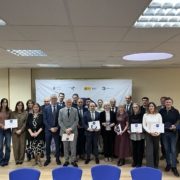
At ENSA, the safety and well-being of our people are at the heart of everything we do. In line with this commitment, we have joined the CIRCULA Project, an initiative promoted by the Instituto Cántabro de Seguridad y Salud en el Trabajo (ICASST) in collaboration with the Dirección General de Tráfico (DGT). The project seeks to encourage safe mobility practices in the workplace, aiming to reduce risks associated with commuting and contribute to a safer working environment.

Road traffic accidents remain a significant challenge in occupational safety, and initiatives like CIRCULA highlight the importance of collective action. As part of this commitment, we have implemented a comprehensive plan integrated into our corporate strategy. This plan includes measurable objectives and monitoring indicators to ensure progress and accountability.

We firmly believe that road safety is a shared responsibility. Every individual plays a vital role, and companies have both the capacity and the duty to foster behaviors that protect lives and create healthier, more sustainable work environments. Through this initiative, we want to build a safety culture that extends beyond the workplace and contributes to the well-being of society as a whole.

ENSA Highlights Technological Leadership and Talent Development at World Nuclear Symposium in London

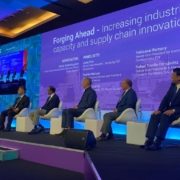
ENSA was proud to participate in the World Nuclear Symposium organized by the World Nuclear Association in London. Our team joined leading companies to discuss strategies for strengthening industrial capacity and driving supply chain innovation.

During the panel session Increasing Industrial Capacity and Supply Chain Innovation, we shared how ENSA has consistently invested in advanced manufacturing technologies for more than five decades. This includes state-of-the-art machinery and proprietary robotic systems, reflecting our belief that technological progress, customer focus, and talent development are essential to competitiveness. Through initiatives such as ENSAcademy, we continue to foster expertise and innovation within our organization.

We also presented the capabilities of our Advanced Technology Center, where we develop solutions to maximize automation and efficiency in production processes. These specialized facilities, together with plans to expand our infrastructure, demonstrate ENSA’s long-term commitment to supporting the global nuclear sector.

ENSA will be involved in the manufacturing of the Reactor Head for TerraPower’s Natrium® Reactor

Construction works of the first plant in the state of Wyoming (USA) are already underway with a goal to come into operation in 2030

20/12/2024. Cantabria (Spain). ENSA (Equipos Nucleares S.A., S.M.E.) proudly announces that will participate in the manufacturing process of the Reactor Head of the first advanced Natrium reactor, developed by the US company TerraPower. This work represents a tremendous opportunity for ENSA as it is the first reactor of this kind to be manufactured worldwide, following the highest quality standards in accordance with the most demanding and strict nuclear regulations.

ENSA’s high international competitive capabilities and its more than fifty years of experience as a manufacturer have been key to TerraPower´s award decision. A job of these characteristics requires an exhaustive sequence of engineering, supply-chain and manufacturing tasks, which covers from an in-depth design analysis of the most optimal manufacturing sequence to the supply of the materials required to execute planned work.

Ensa has delivered to Santa María de Garoña NPP the first ENUN 52B dual-purpose spent fuel cask

Equipos Nucleares S.A., S.M.E. (Ensa) has delivered the 4th of May to Santa María de Garoña NPP the first ENUN 52B dual-purpose spent fuel cask. This cask is the first of an order of 5 units from Spain’s ENRESA (Empresa Nacional de Residuos Radiactivos, S.A., S.M.E., M.P.) placed in October 2012, which included the design, licensing and manufacturing of such casks for the boiling water reactor owned by Nuclenor S.A..

The ENUN 52B bare fuel type cask has been specifically designed to meet Santa María de Garona needs, and is able to hold 52 BWR assemblies. It is comprised of a carbon steel forging body surrounded by a neutron shielding polymer, with two bolted lids and a basket with metal matrix composite neutron absorbing material and stainless steel plates. The cask was first approved for storage by CSN (Consejo de Seguridad Nuclear) on November 5th 2014 and for transportation the 11th June 2015.

The remaining 4 ENUN 52B casks will be delivered throughout May and June of this year. The auxiliary equipment needed for the cask loading operations have also been designed and manufactured by Ensa, and are in the NPP ready to be used both in the NPP and in the existing ISFSI. Cold tests are expected to be performed after summer, with no confirmed dates yet

Ensa is currently manufacturing 44 additional units of a revised version of the ENUN 52B cask, which together with the 5 existing units will be able to store the whole spent fuel inventory of Santa María de Garoña NPP, including high burnup and damaged fuel. An innovative shielding solution is being designed in order to dry storage the whole spent fuel inventory at the interim storage facility located at the NPP site, and initiate dismantling and decommissioning activities.

Ensa has completed the order for two steam generators, shipped for nuclear power plants in France

Maliaño, 14th January 2020 – On 10 January, Ensa, Equipos Nucleares, S.A., S.M.E., a company located in Maliaño (Cantabria), shipped two new steam generators, 900 Mw from Framatome, to France. These nuclear components, measuring 320 tons, 21 metres in length and 4.5 metres in diameter each, correspond to the model used for replacement in French nuclear power plants.

This shipment completes an order received at the end of 2012 for which the French company Framatome, (owned by Électricité de France (EDF), Mitbsubishi Heay Industries and Assystem), commissioned Ensa to manufacture three steam generators. Following the delivery of the first one in March 2019, shipped to the CNPE Gravelines nuclear power plant in France, owned by EDF (Électricité de France), Ensa has kept the other two nuclear components in storage pending the final decision on the assignment of the plant at which they will be installed.

Due to Ensa’s specialisation in the manufacturing of steam generators for the nuclear industry, a field in which it has already exceeded the figure of more than one hundred units for different countries, the company has become a reference in the sector at international level as a supplier to countries such as the United States, China, South Korea, India, Germany, France, Belgium, Sweden and Slovenia, in addition to working for the Spanish plants.

Ensa Group

The Ensa Group of companies is made up of the parent company Equipos Nucleares, S.A, S.M.E., which is 78.75% owned by Sociedad Española de Participaciones Industriales (SEPI) and 21.15% by Dirección General de Patrimonio del Estado and its subsidiary Enwesa Operaciones, S.A, S.M.E (ENWESA), which is 82.55% owned by Ensa.

Ensa specialises in the manufacture of components such as reactor vessels, including internals, supports and covers, steam generators, primary cooling circuit piping, pressurisers, heat exchangers, fuel element heads, fuel storage and transport containers and fuel racks.


Ensa has completed the installation of three heat exchangers of the JHR project

Maliaño, 22nd January 2020 – Ensa, Equipos Nucleares, S.A., S.M.E., a company located in Maliaño, has wide national and international experience in the manufacturing of large nuclear components, including heat exchangers, developed using different technologies and based on the standards and codes required by companies in the sector.

Ensa, as part of the Spanish contribution to the development and construction of the Jules Horowitz Reactor, is the company responsible for the manufacturing and installation of the primary circuit heat exchangers, which are currently under construction at the centre of the Cadarache nuclear power plant in France. The assembly operation carried out by the Cantabrian company has been completed on schedule. Ensa has completed the installation of the three heat exchangers of the JHR project, whose main objectives are the irradiation of materials and fuels used in current and future nuclear reactors, in order to guarantee the safety and production of radioisotopes for medical purposes.

The work carried out has been approved by the notified body. This procedure was essential in order to be able to start the work on site. The complexity of the process has led to Ensa being congratulated on the success of the complicated operation of introducing the exchangers at their final location, due to space limitations.


Ensa wishes you a Merry Christmas

Feliz Navidad y Próspero Año 2020

Merry Christmas and New Year 2020

Joyeux Noël et Nouvelle Anée 2020

祝您圣诞和新年快乐,2020繁荣昌盛!


** Christmas card designed by Andrés Ordóñez la Villa


Ensa collaborates with the University of Cantabria and the CSIC in a project on non-destructive ultrasonic testing techniques

Maliaño, December 17th, 2018 – Equipos Nucleares S.A., S.M.E collaborated with the University of Cantabria and the Higher Council for Scientific Research in a project related to the techniques of non-destructive testing by ultrasound whose objective was that the Cantabrian company improve its training in two new generation techniques Phased Array and TOFD.

The execution of this project is translated in terms of innovation for Ensa, due to the fact that the advanced ultrasound tests can contribute to guarantee the quality of the welds in the welding station itself.

This collaboration has served to launch a new inspection technology project aimed at robotizing tests for the ITER project with which the Cantabrian company and the UC will continue working together.

The project was financed by the Ministry of Innovation, Industry, Tourism and Trade of the Government of Cantabria through the European Regional Development Fund .